
[ad_1]
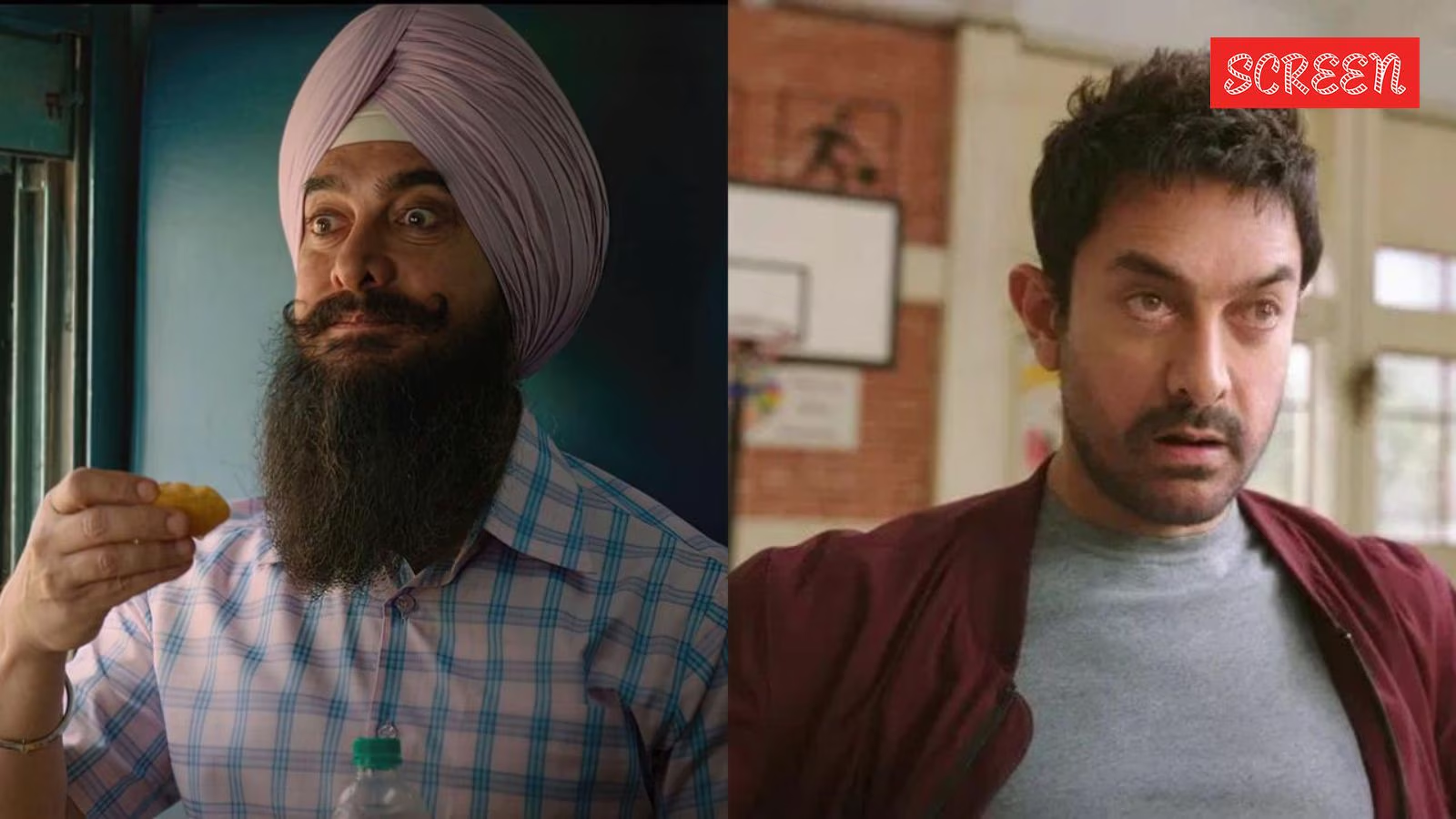
Wide-eyed, mouth agape, brows arching in conflicting directions, and a voice calibrated to a cartoonish pitch. These alone capture Aamir Khan’s last two performances. The characters could scarcely be more disparate, the settings poles apart, the films themselves worlds away. Yet Aamir’s tonal signature remains parochial. Whether embodying human disability in Laal Singh Chaddha or affirming that difference is no deficiency in Sitaare Zameen Par, his delivery borders on buffoonery, undermining the very humanity he intends to convey.
Why this sudden critique of his performances? Why not. Recently, Sai Pallavi, in her Bollywood debut with the Aamir-backed Ek Din, confessed on his YouTube channel that perhaps she had been miscast, saying, “I think somebody else was meant to do this film.” It makes you wonder, the superstar, hailed as the “thinking Khan,” seems increasingly at odds with his own portrayals. The precision he demands from others often eludes him in his own embodiment.

Casting gone wrong in Laal Singh Chaddha
The casting story of Laal Singh Chaddha is arguably more revealing than the film itself. On multiple occasions, Aamir Khan has revealed that it was not he, but his son Junaid Khan, whom he had envisioned to helm the role. In a conversation with Jio Hotstar, Aamir explained that when Junaid returned to India after completing his acting training in Los Angeles, he was curious to see how his son had evolved as an actor. So he decided to test him as an actor.
Recounting the early stages, Aamir said, “I loved the script of Forrest Gump. We were very excited. At that time, Junaid had just completed his acting course in LA. He had returned with experience, and I thought, let me see what he has learned.” He asked director Advait Chandan to shoot select scenes with Junaid, not simply to assess him, but also to gauge Chandan’s ability to manage a project of that scale.
“He shot about twenty minutes of film, two or three difficult scenes we selected. When I saw it for the first time, I was shocked, Junaid was so good.” Aamir then screened the footage for family and industry insiders. “I showed it to my family, to Mansoor. He said, ‘Aamir, you should take Junaid, you should not do this film. He is Laal.’ I showed it to others in the industry to be sure, and almost everyone agreed: he was perfect for the role.”
By then, Aamir Khan was convinced. “At that point, I was certain we should take Junaid as Laal Singh Chaddha because he was doing exceptionally well.” Yet, for multiple reasons, Aamir ultimately chose to play the role himself. He admitted, however, that Junaid’s performance influenced his own: “The honest truth is, when I finally did the film, I kept referring to Junaid, how he would have done it, and I think that unsettled my performance. If I hadn’t seen him, it wouldn’t have mattered.”
Also Read | Dhurandhar 2: Aditya Dhar genuflects and the story sinks into subservience
Story continues below this ad
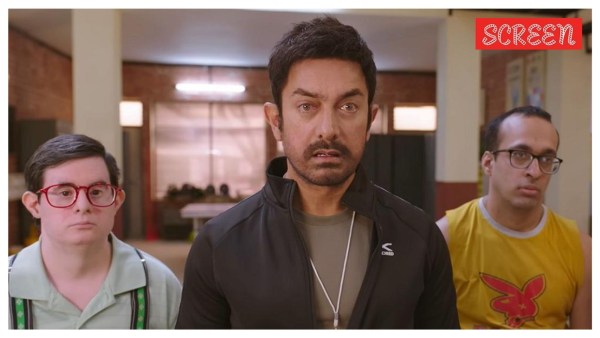 Aamir Khan in a still from Sitaare Zameen Par.
Same story with Sitaare Zameen Par
What is perhaps most intriguing is Aamir Khan’s own admission after Laal Singh Chaddha’s failure. He confessed that his performance had gone astray and promised to avoid the same mistake in his next, Sitaare Zameen Par. On Rhea Chakraborty’s podcast, he had said, “My performance in Laal Singh Chaddha was pitched too high. Unlike the original, where Tom Hanks carried the film effortlessly, my performance let it down. By my reading, it was not good. I hope to do better next time.”
In the same chat, he went onto praise Sitaare Zameen Par, calling it “a great film.” But the underlying flaw remained: the familiar tropes, gaping eyes, buffoonish body language, an overly elevated pitch, persisted. Across the board, viewers sensed the same dissonance: the film could have offered effortless entertainment, but Aamir’s casting once again undermined it, leaving the story heavier, less natural, and oddly distorted by its own intended charm.
If we look further back, a pattern in Aamir Khan’s performances emerges. Even in films like Thugs of Hindostan, Secret Superstar, PK, (one of his dual roles in) Dhoom 3, or even Ghajini, he consistently seems to favour exaggeration over genuine earnestness. There’s a method to his madness which is simply an intentional tilt towards caricature. You can almost see the effort, the craft being consciously deployed, rather than the character living organically.
The most revealing moment came last year, when an audition tape surfaced showing Aamir giving a shot at the character of Ravi Kishan in his ex-wife, Kiran Rao’s Laapataa Ladies. Watching the clip, everything that has gone wrong in his portrayals becomes clear. His interpretation of a foul-mouthed, chest-thumping cop was almost painful to witness, a study in overemphasis that bordered on the absurd. Yet, the smart part of the story is that both Kiran and Aamir himself recognized the superficiality. He should not be cast.
Story continues below this ad
Some self awareness. Some honesty with oneself. Some courage to step back.
[ad_2]
Source link