
[ad_1]
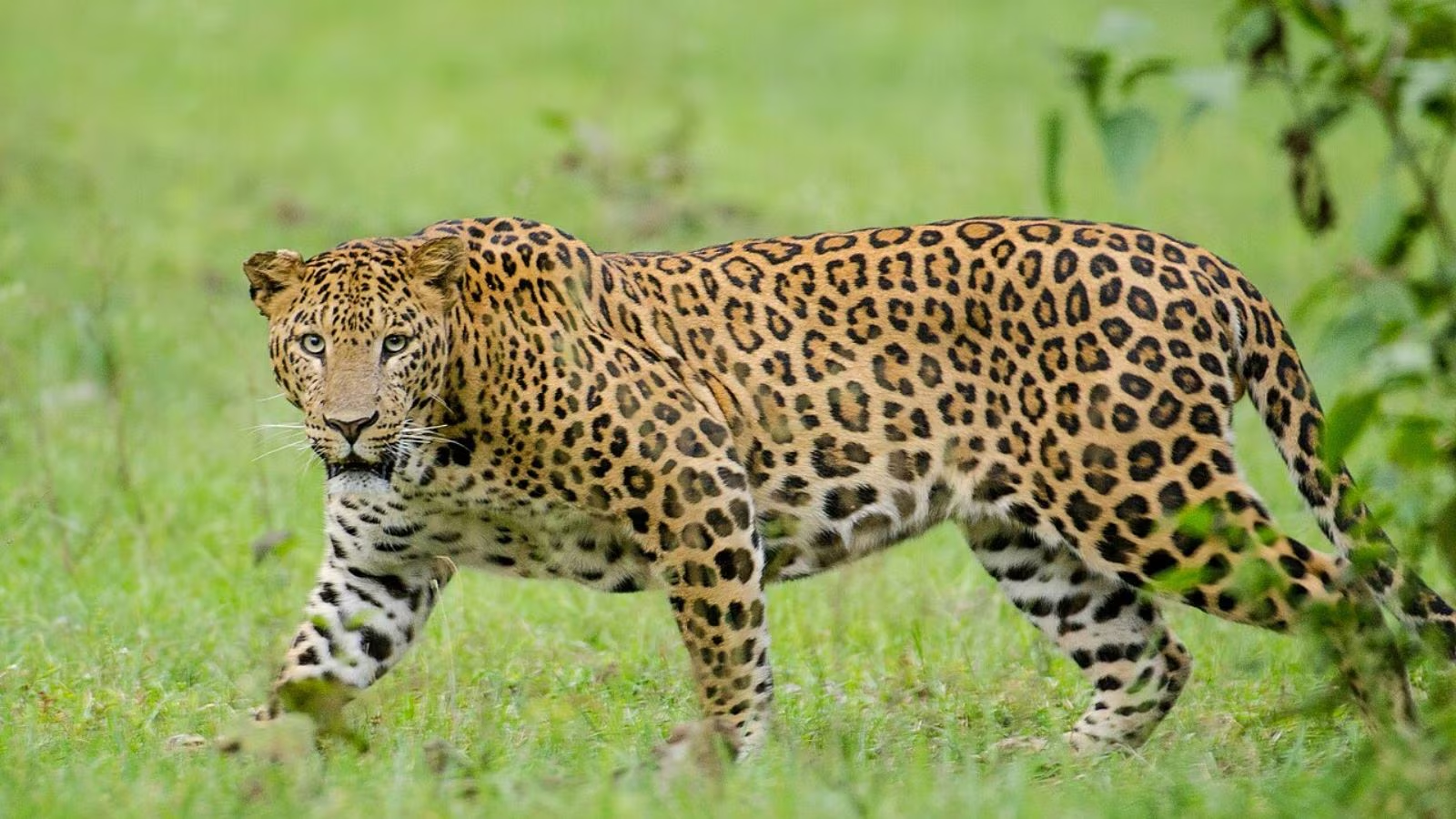
Asola Bhatti, Delhi’s only wildlife sanctuary, could soon get a dedicated core area and a wildlife underpass on the Gurgaon-Faridabad highway to help protect leopards and other animals from road accidents.
The proposals are part of a new 10-year management plan (2024-25 to 2034-35) prepared by the Wildlife Institute of India (WII). The plan divides the sanctuary and the adjoining forest landscape into five zones and has earmarked Rs 61.64 crore for the various developmental activities.
Part of the Ridge in South Delhi, the sanctuary is a rugged mosaic of thorn forests and flooded mining pits and is part of the Sariska-Delhi wildlife corridor in the Aravallis that runs from the Sariska Tiger Reserve in Rajasthan to the Delhi Ridge.
Several reports have pointed to the presence of leopards and other mammals in this sanctuary, highlighting the significance of the space. The WII, using 23 camera traps, also recorded 23 mammal species, including 18 wild and five stray or domestic species as part of a study to prepare the plan.
Five zones, five key functions
-Core zone 9 sqkm: Identified for strict protection because of carnivore movement, including leopards and jackals.
-Conservation zone 24 sq km: Will focus on restoration and reducing urban pressure
-Tourism zone (7.6 sq km) and interpretation-cum-education zone (5 sq km): Will regulate public access and learning
Story continues below this ad
-Extended buffer zone (12.1 sq km): Will include fragmented patches outside the present sanctuary boundary, including areas near Tughlaqabad and below Bhatti village, which could serve as future wildlife corridors.
Visitor facilities
Going beyond a limited eco-cart ride to Neeli Jheel, the plan has proposed a dedicated interpretation centre with interactive exhibits, dioramas, touchscreens, an audio-visual section, a resource library and displays on the Aravalli ecosystem, mining history and ecological restoration. The plan has noted that the existing interpretation facility is inadequate and functions largely as a multipurpose hall.
Other visitor proposals have included an upgraded ticket counter, visitor information centre, cafeterias, eco-friendly toilets, souvenir shops, improved cycle tracks, watchtower upgrades, gazebos, battery-operated minibuses, additional eco-carts and guided nature trails.
The plan has recommended training local youth as nature guides to lead eco-tours, birdwatching walks and interpretation sessions. It has also suggested involving women’s self-help groups in managing cafeterias and souvenir shops.
Story continues below this ad
A ‘Research and Citizen Science Corner’ near the interpretation centre, where students, researchers and visitors can engage with camera-trap images, bird checklists, butterfly records and biodiversity monitoring, is also on the cards.
The recommendations include setting up the Asola Bhatti Conservation Foundation to support long-term conservation, scientific management, tourism, rescue operations, capacity building and financial sustainability.
The foundation has been proposed with a governing body for policy decisions and an executive committee for field-level implementation. Its technical staff has been proposed to include an ecologist, conservation biologist, veterinary officer, GIS and data expert, community outreach officer and ecotourism and nature education officer.
What camera traps found
The WII recorded 23 mammal species. These include common leopard, striped hyena, golden jackal, nilgai, chital, sambar, jungle cat, wild boar, Indian hare, common palm civet, small Indian civet, mongoose species and rhesus macaque.
Story continues below this ad
Predators such as leopards and hyenas were mostly recorded in less-disturbed patches, while herbivores such as nilgai and chital were found across open scrub and plantation zones.
Leopards, striped hyenas, common palm civets and sambars were rare detections, indicating low density and restricted distribution.
Beyond mammals, the sanctuary recorded 121 bird species, 30 species of herpetofauna, eight amphibians and 22 reptiles, and 53 butterfly species.
Urban stressors
The plan notes that the sanctuary is under pressure from several factors.
Story continues below this ad
One of those pressures has been stray cattle. Camera-trap data has found that stray cattle accounted for about 15.1% of all mammal detections, making them the second-most abundant mammal group after rhesus macaques.
Cows have been the most common, followed by buffaloes, pigs and camels.
It noted that cattle have often been found near monkey-feeding points and waterholes, where they have competed with native herbivores and depleted water availability. It has recommended stronger coordination with the Municipal Corporation of Delhi for systematic removal and control of stray cattle.
The plan noted that nearly 20,000 rhesus macaques have been relocated to Asola Bhatti over the years, and that the sanctuary management has been spending nearly Rs 1 crore annually on feeding them at 18 designated points.
Story continues below this ad
It has called this model ecologically and financially unsustainable, saying artificial feeding has altered natural foraging behaviour and contributed to population growth beyond the sanctuary’s carrying capacity.
The plan has recommended population estimation, carrying capacity assessment, habitat enrichment with native fruit-bearing species, gradual phasing out of artificial feeding and a humane sterilisation programme. Other stresses include encroachment concerns, invasive species proliferation, staffing gaps and fire risk.
[ad_2]
Source link